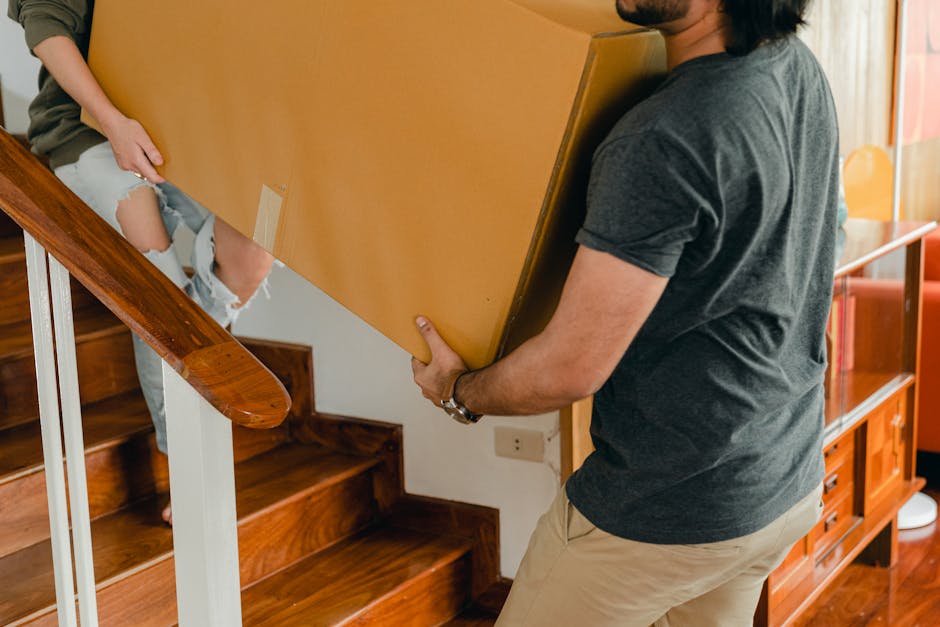
Staircase challenges UB6: Pro methods to protect items
Posted on 04/07/2026
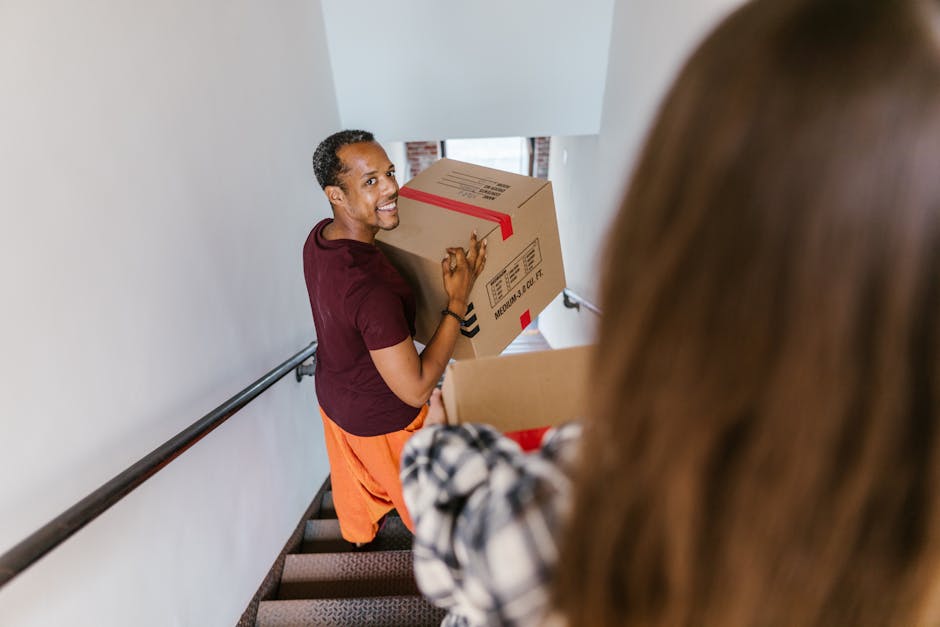
Anyone who has tried to move a bulky wardrobe, a glass coffee table, or even a well-loved sofa up a narrow staircase knows the feeling: the angle is awkward, the walls are close, and every step seems to ask for trouble. Staircase challenges UB6: Pro methods to protect items is really about one thing-how to get belongings from one floor to another without scuffs, shocks, pinched fingers, or that dreadful moment when something slips. In UB6 homes, especially flats and older terraces, the staircase can be the main obstacle, not the final destination. This guide breaks down the safest, most practical ways to protect your items, your property, and your nerves.
You'll find a clear method for planning the move, choosing the right packing materials, handling awkward turns, and deciding when it's smarter to call in help. There's no fluff here. Just grounded advice, a few real-world observations, and the sort of detail that actually saves a chair leg or a plaster wall.
Why Staircase challenges UB6: Pro methods to protect items Matters
Staircases are unforgiving. One poor angle, one rushed turn, and you can mark the banister, chip a picture frame, or crack a drawer front. In UB6, where moving routes often include compact hallways, shared entrances, and tight turns, staircase risk is one of the biggest reasons otherwise simple moves become stressful.
Protecting items properly is not just about wrapping more bubble wrap around everything. It is about understanding how weight shifts on stairs, where contact points happen, and how to slow the process down without turning it into a full-day drama. To be fair, most damage does not happen because an item is "fragile" in the usual sense. It happens because it was awkward, overconfidently carried, or not prepared for the staircase geometry at all.
This matters even more if you are dealing with painted wood, mirrored doors, mattresses, wardrobes, office kit, or delicate household appliances. For larger items, a staircase is often where the move either goes smoothly or starts unraveling. If you're planning a broader home move, it helps to pair this advice with practical packing guidance for a faster house move and, when furniture is involved, the company's page on furniture removals in Greenford.
How Staircase challenges UB6: Pro methods to protect items Works
The process is simple in principle, though not always simple in practice. First, you assess the staircase. Then you protect the item, the route, and the people carrying it. Finally, you move in a controlled sequence, using posture, communication, and the right equipment.
Here is the core logic:
- Assess the route: check width, headroom, turn points, banisters, light fittings, and any slippery patches.
- Protect the item: wrap corners, secure doors and drawers, and remove detachable parts.
- Protect the property: cover walls, railings, floors, and door frames where contact is likely.
- Use two-person control where possible: one person leads, one supports and steadies.
- Move slowly through turns: this is usually where things snag. Not always, but often enough.
Think of staircase moving as a sequence of controlled micro-adjustments. The item is not just being carried; it is being managed through a changing set of angles. A sofa that looks fine on level ground can suddenly become a balancing act once it hits the stairs. That is why seasoned movers speak in terms of tilt, pivot, and clearance rather than brute strength.
If your staircase is especially tight, you may need a different approach entirely, such as removing feet, separating modular sections, or temporarily storing the item elsewhere. In some moves, using short-term storage in Greenford is the calmer option. Honestly, sometimes the best way to protect an item is to stop forcing it up the stairs at all.
Key Benefits and Practical Advantages
When staircase protection is handled properly, the benefits show up in ways people notice immediately. Not dramatic, just quietly useful. No fresh scuffs on the wall. No torn fabric. No last-minute panic with neighbours watching from the landing. Small wins, but they stack up.
- Less damage to belongings: corners, frames, veneers, and upholstery all stay safer.
- Lower risk to the staircase itself: banisters, paintwork, and carpets are less likely to take a hit.
- Faster, calmer movement: because everything is planned, there is less stop-start confusion.
- Better teamwork: clear roles reduce the chance of two people pulling in different directions.
- Less chance of injury: controlled lifting is simply safer than improvised lifting.
There is also a practical financial angle. Damaged furniture, broken mirrors, scratched flooring, or chipped paint can all become expensive annoyances after the move. If you are comparing options and want a clearer sense of what you're paying for, it may help to review pricing and quote details alongside the company's insurance and safety information.
Expert summary: The best staircase protection strategy is not "wrap everything and hope." It is route planning, item preparation, controlled lifting, and route protection all working together.
Who This Is For and When It Makes Sense
This approach is useful for almost anyone moving through stairs, but some people will feel the difference more than others.
- Flat movers: especially in upper-floor homes where the staircase is the main access point.
- Families with large furniture: sofas, cots, wardrobes, and dining tables can be awkward on turns.
- Students and renters: if you are moving quickly, mistakes happen fast, and protection matters.
- Office movers: desks, monitors, archive boxes, and printers need steady handling.
- Anyone moving valuable or fragile pieces: mirrors, glass cabinets, artwork, or instruments.
It makes particular sense when the staircase is narrow, has a central turn, or includes a low ceiling on the landing. That is the sort of layout that looks manageable on a quick look but becomes awkward the moment the item reaches the bend. If you're moving on a tight schedule, you may also want to read about same-day moving options in Greenford and same-day removals in Greenford.
Truth be told, if you have to ask "will this fit?" while standing halfway up the stairs, it probably deserves a more careful plan than the one already in your head.
Step-by-Step Guidance
The safest staircase moves are usually the ones that look slightly boring from the outside. No rush, no guessing, no heroic last-minute lift. Here's a solid step-by-step method.
- Measure the item and the staircase. Check width, height, depth, and the tightest turning point. Don't forget handrails and overhead light fittings.
- Empty and strip the item down. Remove shelves, drawers, detachable legs, cushions, cables, or doors where possible.
- Wrap the vulnerable parts. Use blankets, padded wraps, corner protectors, and tape that will not leave sticky residue.
- Protect the route. Cover the staircase edges and any wall areas likely to get brushed during the carry.
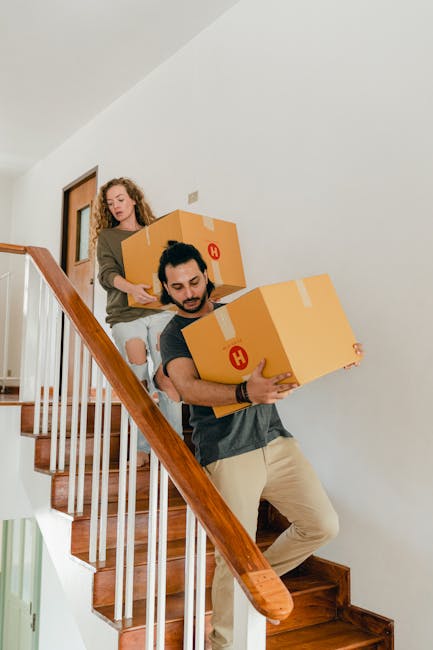
- Assign roles. One person leads the item from below or above, depending on the shape; the other stabilises and watches for snag points.
- Lift with a clear rhythm. Move one step at a time, with verbal cues. Short commands work best: "stop," "lift," "pivot," "hold."
- Pause at the landing. Let the item settle before the turn. That tiny pause can prevent a lot of swearing.
- Re-check the grip after every change in angle. What felt stable on the lower flight may not feel stable on the landing.
If you are moving soft furnishings, use added care around straps and compressible edges. For example, a mattress may look harmless, but it can catch airflow, bend in odd places, and twist on a landing. There's a good reason people look for ways to move beds and mattresses efficiently before they even book the van.
A useful rule: if you feel rushed, stop and reset. The staircase will still be there in 30 seconds.
Expert Tips for Better Results
A few small habits make a bigger difference than most people expect.
- Use breathable protection for upholstery: plastic can trap moisture, so blanket wraps are often kinder for longer carries.
- Protect edges twice: corners on cabinets and tabletops are usually the first point of damage.
- Move during quieter times if you can: fewer people in the corridor means fewer surprises.
- Keep a torch or phone light ready: stairwells in older buildings can be dim, especially early morning or late evening.
- Wear proper footwear: grip matters more than style. Flat, secure soles are ideal.
- Label awkward items: if something has a weak side, mark it so nobody turns it the wrong way up.
One thing movers learn quickly: the item you think will be easiest is sometimes the one that causes the most trouble. A light lamp with a long base can be more awkward than a solid chair. Movement is strange like that.
If you're building a move around better organisation overall, the article on decluttering before moving pairs neatly with this one. Less clutter means fewer items competing for space on the stairs.
Common Mistakes to Avoid
Most staircase damage comes from a handful of avoidable mistakes. The good news is that once you know them, they become easy to spot.
- Carrying too much at once: one oversized lift is riskier than two smaller trips.
- Ignoring the landing: many people only measure the staircase, then discover the turn is the real bottleneck.
- Using weak tape on delicate finishes: some adhesives can leave marks or pull paint.
- Letting doors swing open: a loose door edge can catch a wall or someone's hand.
- Forgetting floor protection: grit underfoot can scratch surfaces and reduce grip.
- Trying to "muscle through" a jam: if it sticks, reverse the move and rethink the angle.
There is also the classic mistake of assuming every move needs the same approach. A piano is not a sofa. A sofa is not a freezer. And a freezer, as anyone who has moved one knows, has its own awkward personality. If that resonates, it may be worth reading expert advice on storing a freezer with care.
Sometimes the mistake is psychological rather than physical: people are embarrassed to pause and ask for help. No need. That pause can save the whole job.
Tools, Resources and Recommendations
You do not need a van full of specialist kit for every staircase move, but the right basics make life noticeably easier.
| Tool or material | What it helps with | Best used for |
|---|---|---|
| Furniture blankets | Padding and surface protection | Wood, painted items, sofas, cabinets |
| Corner protectors | Reducing chip and dent risk | Tables, shelving, frames |
| Moving straps | Improving control and grip | Heavy or awkward items |
| Non-slip gloves | Better hand security | Glass, appliances, polished surfaces |
| Floor and wall covers | Protecting the route itself | Stairs, landings, narrow halls |
| Labels and tape markers | Showing weak points and orientation | Any item with removable parts |
For many households, the smartest "resource" is simply a bit more preparation time. That said, a service that offers man and van support in Greenford can be handy when you need transport and carrying in one go, while packing and boxes help you organise smaller items before they ever reach the stairs.
If you are moving a specialist item, such as a piano, the handling becomes even more exacting. In that case, it is worth looking at piano removals in Greenford or reading the related article on safe piano transport. Different object, different level of patience. Same staircase, though.
Law, Compliance, Standards, or Best Practice
For ordinary household moves, there is usually no special staircase law to memorise, but good practice still matters. In the UK, movers and households should act with reasonable care to avoid injury and prevent damage to property. That sounds obvious, but it is the useful part.
In practical terms, best practice usually means:
- Keeping access routes clear so nobody trips over loose packaging or tools.
- Using safe lifting techniques and not carrying loads that block vision entirely.
- Protecting communal spaces in flats or shared buildings.
- Respecting building rules where they exist, such as booking lift slots or keeping noise down at certain times.
- Checking insurance arrangements before a move starts, not after something has gone wrong.
If you are hiring help, the company should be able to explain how it manages safety, access, and damage prevention in plain language. You do not need legal jargon. You need reassurance that the stairs will not become a hazard zone. If something feels unclear, ask. Seriously, ask.
For readers who want to understand wider moving expectations, the pages on health and safety policy, terms and conditions, and accessibility information can help set expectations around process and responsibility.
Options, Methods, or Comparison Table
Different staircase situations call for different methods. Here is a straightforward comparison.
| Method | Best for | Pros | Trade-offs |
|---|---|---|---|
| DIY with basic protection | Small, light, non-fragile items | Low cost, quick to organise | Higher risk on tight turns |
| Two-person careful carry | Medium furniture, boxes, appliances | More control, better balance | Still depends on clear communication |
| Professional removal support | Heavy, valuable, or awkward items | Experience, equipment, lower stress | Costs more than DIY |
| Temporary storage before final delivery | Items that do not suit the staircase at all | Avoids forcing a bad fit | Requires extra planning |
In practice, the best choice often depends on the staircase itself. A wide, straight run is very different from a narrow turn in a top-floor flat. If your move includes a staircase plus limited access, flat removals in Greenford are often the most relevant kind of support, especially when the route is tight from front door to landing.
Case Study or Real-World Example
A recent UB6-style move involved a three-piece sofa, a narrow stairwell, and a landing turn that looked harmless until the sofa reached the bend. The first attempt stalled halfway because the armrest caught the rail. Nothing dramatic happened, thankfully, but the team stopped immediately rather than forcing the angle.
They then adjusted the plan in three simple ways. First, they removed the feet and wrapped the armrests more carefully. Second, they protected the wall edge at the landing with an extra blanket. Third, they changed the carry order so the leading end entered the turn first, rather than trying to pivot in one movement. The result was slow but clean, and the sofa arrived without a scrape.
That move is a good reminder that staircase protection is rarely about strength alone. It is about noticing the snag point early. If something feels off on the first carry, don't be stubborn. Reset, breathe, and try again with a better angle. A bit of humility goes a long way on stairs.
Moves like this are also where a broader plan helps. People who have already sorted, packed, and reduced clutter tend to cope better. A useful companion read is how to transition homes without losing your cool, because calm is a surprisingly practical moving tool.
Practical Checklist
Use this checklist before anything goes up or down the stairs.
- Measure the item and the staircase, including turns and landing space.
- Remove loose parts, shelves, drawers, feet, and cables.
- Wrap corners and edges with padded protection.
- Cover walls, banisters, and likely contact points.
- Clear the route of shoes, bags, boxes, and loose rugs.
- Check lighting in the stairwell.
- Wear sturdy, grippy footwear.
- Assign one lead person and one stabiliser.
- Agree on verbal commands before lifting starts.
- Pause at the landing before turning.
- Stop immediately if the item catches or twists.
- Re-check hands, grip, and posture after every turn.
- Keep children and pets well away from the route.
- Confirm insurance, access, and timing if professionals are involved.
If your move includes a lot of sorting before moving day, you might also find decluttering your home before moving a useful companion read. Less clutter means fewer accidents and less pressure on the staircase.
Get a free quote today and see how much you can save.
Conclusion
Staircase challenges UB6: Pro methods to protect items is really about slowing down the right things and speeding up the right things. Slow down the carrying, the turning, the decision-making. Speed up the preparation, the communication, and the route protection. That balance is what keeps items safe.
In real terms, good staircase handling protects belongings, reduces stress, and helps the move feel manageable rather than chaotic. It also gives you a little breathing room. And let's face it, a moving day with fewer near-misses is a much nicer day.
If you're planning a move in UB6, take the staircase seriously from the start. Measure carefully, pack sensibly, and don't be shy about using help where it genuinely makes sense. A smooth move is rarely an accident. It is usually the result of a few sensible decisions made early.
Quietly done, properly done, and a lot less nerve-racking. That's the aim.